
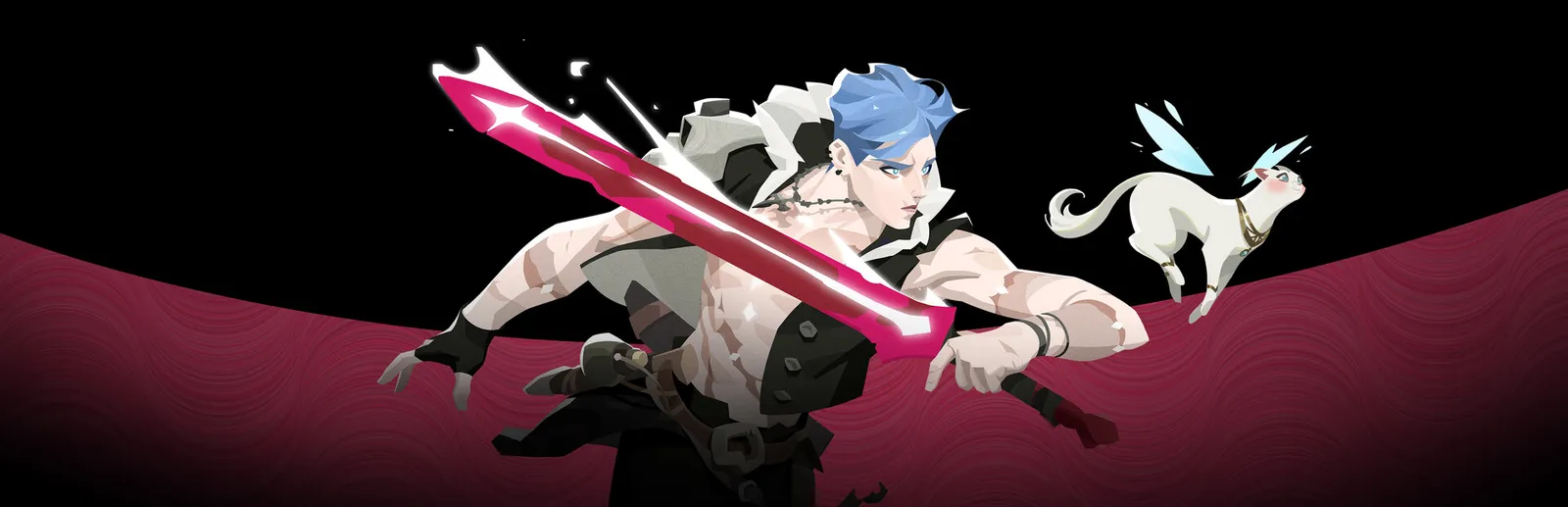
Ember and Blade is planned to ship with six weapon types. Five of them have been named across official material: Sword, Hammer, Shotgun, Gauntlet and Dagger. The free demo hands you three, and they behave nothing alike.
What separates them is not a damage number. It is how much stamina each one asks for, how long its animations commit you, and how well it answers a screen full of enemies versus a single elite.
The five named types
| Weapon | In the demo | Where it is named | What it asks of you |
|---|---|---|---|
| Sword | Yes | Demo, patch notes, leaderboard | Wide, forgiving combo branches |
| Hammer | Yes | Demo, patch notes, leaderboard | Long commitment, charge attacks, heavy stamina cost |
| Shotgun | Yes | Demo 2.0 patch notes | Close-range spreads, repositioning between volleys |
| Dagger | No | Infernal Trial leaderboard categories | Speed, presumably at the cost of reach |
| Gauntlet | No | February 2026 demo roadmap | Unknown — adjusted before the combat rebuild |
Sword
The Sword is the most complete kit in the demo and the one Demo 2.0 reworked hardest: twelve new combo-specific visual effects were built for it, and its attack presentations were reworked alongside the combo system itself.
It has the widest set of branches, which means a mistimed input still produces something useful instead of leaving you standing. That forgiveness is why it is the right first weapon: you can learn the stamina economy on it without also fighting the weapon.
Hammer
The Hammer got charging and rush attacks in Demo 2.0, plus new dash and dash-charge moves. It is slow, it hits hard, and every one of those properties costs stamina.
The Hammer is also the weapon most affected by the link system. One documented example: the Blessing Rumbling Crescendo has a heavy-attack link that did not trigger on the Hammer's level one charge attack until Demo 2.1 fixed it. That is the kind of interaction a slow weapon runs into — its timings sit on the edges of the systems layered on top of them.
Shotgun
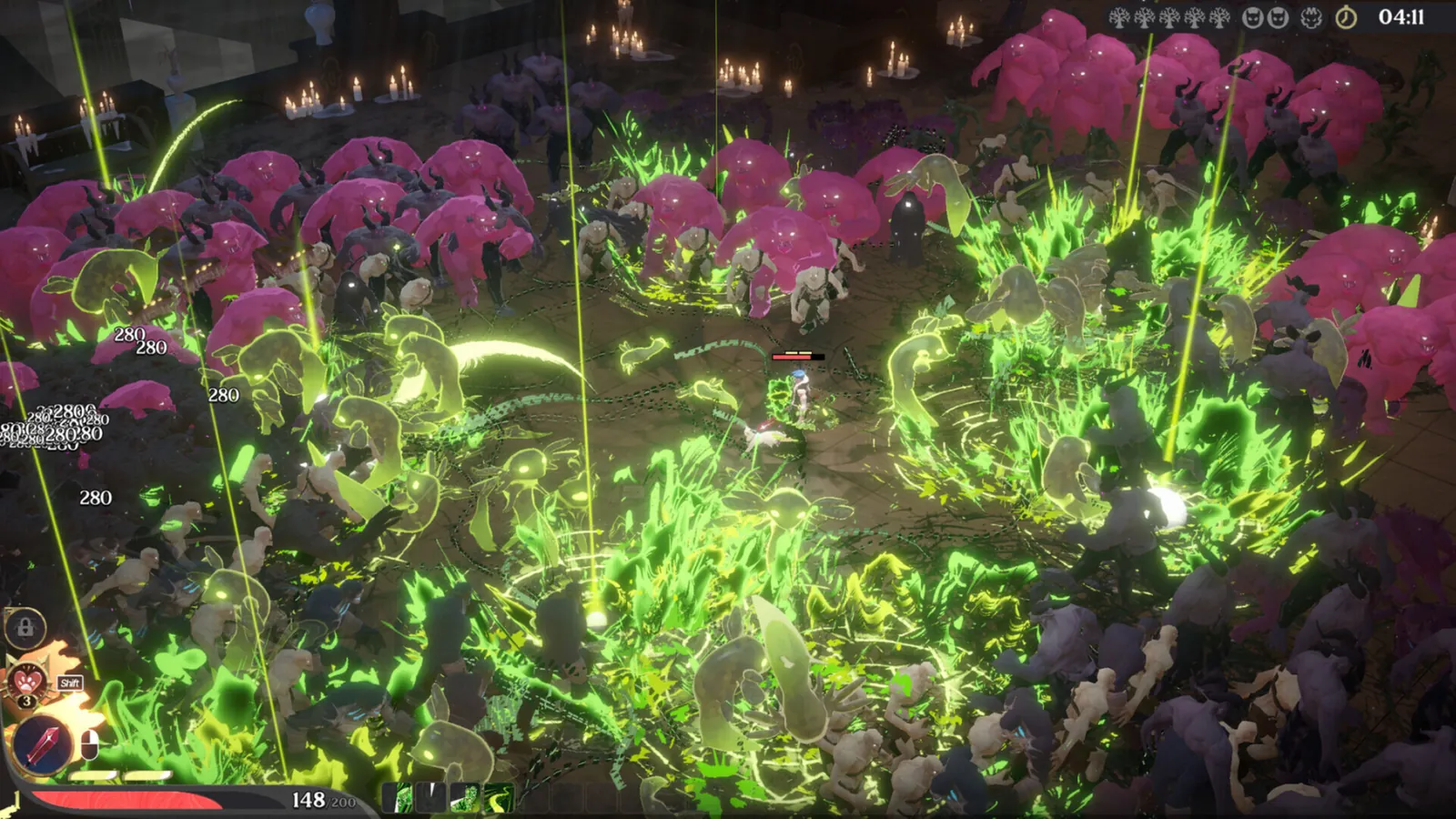
The Shotgun is the odd one out and the newest. It is a ranged projectile weapon introduced in Demo 2.0: heavy attacks fire a barrage of bullets, a spin attack produces rapid fire, and the special attack is an aimed rotating volley.
Treat it as a close-range weapon that happens to have reach. Its volleys want space, and space is what a surrounded player does not have — which is why it pairs badly with panic and well with a planned retreat.
 Official media
Dagger
The Dagger has never been playable, has no patch notes, and appears in exactly one place: the Infernal Trial leaderboard, which was split into Sword, Dagger and Hammer categories so that each style had its own winners.
That single mention is worth more than it looks. A leaderboard category means the weapon existed in a build players could run, which makes the Dagger a real type rather than a plan — and makes its absence from the demo deliberate.
Gauntlet
The Gauntlet appears once, in the February 2026 demo roadmap, as an item under onboarding improvements: "Gauntlet weapon adjustments". That places it in an earlier demo build rather than the current one, and nothing since has shown it in play.
The timing matters. Those adjustments predate combo branching and stamina entirely, so even if the Gauntlet returns unchanged on paper, its action set has to be rebuilt the way the Sword's and the Hammer's were.
The sixth type
One of the six has never been named. LINE Games has said only that six are planned, so any list claiming to know the sixth is guessing. Expect it to appear during Early Access rather than at launch.
The five named types also spread across two different promises. Three exist as code you can play; two exist only as references in a roadmap and a leaderboard. Keeping those lists separate is the difference between a reference page and a rumour.
What to upgrade first
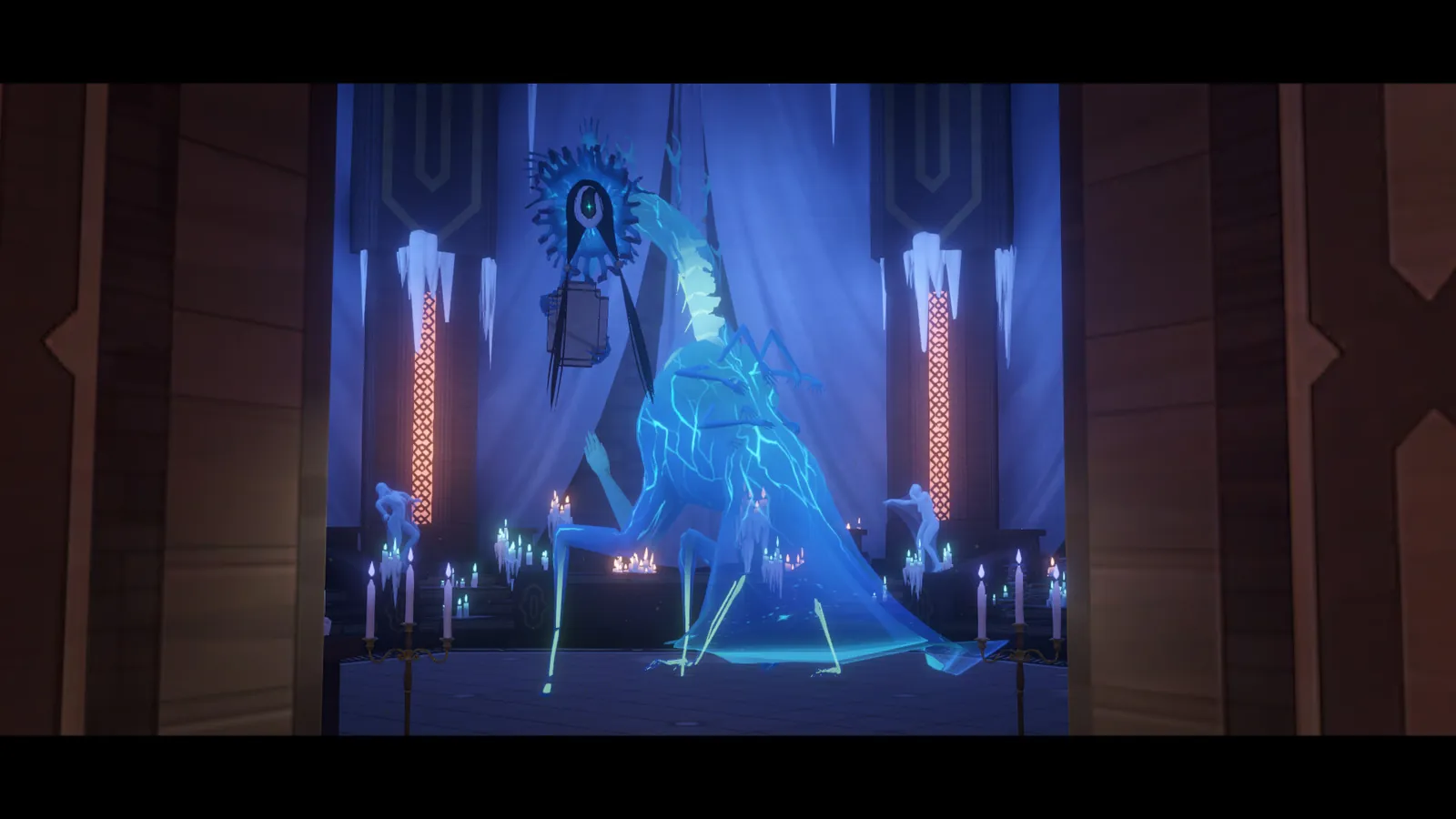
Weapon upgrades run through the Forge and cost Blood Crysts, which drop from bosses. Since bosses are the gate on everything else in Act 1, the sensible order is to upgrade the weapon you can actually finish a boss with rather than the one with the higher ceiling.
In practice that means: pick one weapon before your first boss attempt, put everything into it, and let the others wait until you have beaten Baphomet once.
 Official media
One more thing follows from that: the Forge upgrades one weapon at a time, and Blood Crysts only come from bosses. A player who keeps switching weapons is spreading a boss-only currency across five upgrade paths, which is the slowest way to reach the second act.
What no one can tell you yet
Which weapon ends up strongest in Early Access is a question without an answer: three of the five are unplayable, the full progression tree is not in the demo, and balance has changed with every patch so far. Anyone ranking all six today is ranking three that do not exist in any build you can download.
Amber does not follow the weapon
Amber spent on the Grace of the Arbor stays where you put it. If you split investment across two weapons early, you end up with a build that supports neither; commit to one, then widen once the first boss is down.